Monday, April 30, 2018

Earth is Heavenly


Dog sledding above the Arctic Circle in Norway. Jim Lovell says it’s not that you go to heaven when you die, but “you go to heaven when you’re born.” Earth is the best planet in our solar system. We go to space to save the Earth.
0:22
391K views

I love this tweet by Jeff Bezos on Earth Day 2018 !

It’s not that you go to heaven when you die, but “you go to heaven when you’re born.”

Bezos is quoting US astronaut Jim Lovell.

Sunday, March 25, 2018

Blessy

Today I hereby coin a new word: blessy.

A friend emailed me describing the last six months of her life as "the whole blessed/messy process."


Difficult tasks got done, slowly, or fairly quickly, depending on one's point of view.  Godspeed.


The sadness of letting go of two family members was balanced by the contentment of having cared for them as well as possible in their last years.


It was a blessed time; it was a difficult and messy time.


Blessy.  


Thank you to a different friend, Barbra Graber for finding and sending me this photo.


Saturday, March 24, 2018

Poppies! Persistent...


The humblest and happiest flower on earth is the California poppy.

It can grow in the driest dirt, in the smallest crack.  All is needs is one good rainstorm and it's sprouting.  

We've had a very dry winter in 2017-2018.  The abundance of last year is not happening... "but still she persisted."

Monday, January 1, 2018

The Southern Cross


This photo of the Southern Cross is from Science-Photo-Library, which I accessed through Cafe Press.

We can't see this constellation in the northern hemisphere, but I saw it ten years ago in Argentina.

Here in the north, on New Year's Eve, I love to look out at Orion at midnight and remember where Earth is in its rotation around the Sun.

Wish I were in Colorado or the high desert of California! It's barely possible to see Orion most winter nights in Los Angeles.

I printed this photo for my Christmas cards this year, thanks to Cafe Press.

Thursday, December 28, 2017

Wild Turkeys at Christmas


And now turkeys...

It turns out turkeys live in the wilderness area around Trout Lake near Telluride, Colorado.

My neighbor sees them eating grass near her house on these cold but snowless winter days.

She took this photo near the house further on down the hill between her house and mine.

Introducing the bobcat...


Below is a link to a l-o-o-o-n-g jump by a bobcat... sorry I can't actually put it on this blog.

https://www.facebook.com/NSelection/videos/10154299607351244/?hc_ref=ARRF1hqVXTjKDDGFdcDOC2Zkov7tGqjmVwPjJ9LBRUeYHHXG2zRi4SiKiYPYFsmms-8&pnref=story

Thanks to my high school classmate Linda Binns Monteith for this video from BBC Planet Earth.

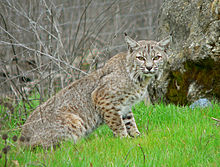
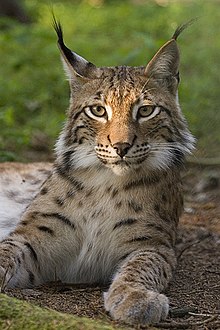
Plenty of time to observe the cat and compare it to the earlier photo of the lynx in our driveway.

Here's what Wikipedia has to say about bobcats:  https://en.wikipedia.org/wiki/Bobcat

And here's the intro:
The bobcat (Lynx rufus) is a North American cat that appeared during the Irvingtonian stage of around 1.8 million years ago (AEO).[2] Containing 12 recognized subspecies, it ranges from southern Canada to central Mexico, including most of the contiguous United States. The bobcat is an adaptable predator that inhabits wooded areas, as well as semidesert, urban edge, forest edge, and swampland environments. It remains in some of its original range, but populations are vulnerable to local extinction ("extirpation") by coyotes and domestic animals. With a gray to brown coat, whiskered face, and black-tufted ears, the bobcat resembles the other species of the midsized Lynx genus. It is smaller on average than the Canada lynx, with which it shares parts of its range, but is about twice as large as the domestic cat. It has distinctive black bars on its forelegs and a black-tipped, stubby tail, from which it derives its name.
Though the bobcat prefers rabbits and hares, it hunts insectschickensgeese and other birds, small rodents, and deer. Prey selection depends on location and habitat, season, and abundance. Like most cats, the bobcat is territorial and largely solitary, although with some overlap in home ranges. It uses several methods to mark its territorial boundaries, including claw marks and deposits of urine or feces. The bobcat breeds from winter into spring and has a gestation period of about two months.

Wednesday, December 20, 2017

Identifying the lynx...


So here's the info on lynxes...  Thank you, Wikipedia!

Lynx have a short tail, characteristic tufts of black hair on the tips of their ears, large, padded paws for walking on snow and long whiskers on the face. Under their neck, they have a ruff which has black bars resembling a bow tie although this is often not visible.
Body colour varies from medium brown to goldish to beige-white, and is occasionally marked with dark brown spots, especially on the limbs. All species of lynx have white fur on their chests, bellies and on the insides of their legs, fur which is an extension of the chest and belly fur. The lynx's colouring, fur length and paw size vary according to the climate in their range. In the Southwestern United States, they are short-haired, dark in colour and their paws are smaller and less padded. As climates get colder and more northerly, lynx have progressively thicker fur, lighter colour, and their paws are larger and more padded to adapt to the snow. Their paws may be larger than a human hand or foot.
The smallest species are the bobcat and the Canada lynx, while the largest is the Eurasian lynx, with considerable variations within species.
Physical characteristics of Lynx species
SpeciesWeightLengthHeight (standing at shoulders)
Eurasian lynxmales18 to 30 kilograms (40 to 66 lb)81 to 129 centimetres (32 to 51 in)70 centimetres (28 in)[5]
females18 kilograms (40 lb)
Canada lynx8 to 11 kilograms (18 to 24 lb)80 to 105 centimetres (31 to 41 in)48 to 56 centimetres (19 to 22 in)[6]
Iberian lynxmales12.9 kilograms (28 lb)85 to 110 centimetres (33 to 43 in)60 to 70 centimetres (24 to 28 in)[7][8][9]
females9.4 kilograms (21 lb)
Bobcatmales7.3 to 14 kilograms (16 to 31 lb)[10]71 to 100 centimetres (28 to 39 in)[10]51 to 61 centimetres (20 to 24 in)[11]
females9.1 kilograms (20 lb)

Species

The four living species of the Lynx genus are believed to have evolved from the "Issoire lynx", which lived in Europe and Africa during the late Pliocene to early Pleistocene. The Pliocene felid Felis rexroadensisfrom North America has been proposed as an even earlier ancestor; however, this was larger than any living species, and is not currently classified as a true lynx.[12]