Saturday, November 18, 2017

Running in Canyon de Chelly

Baby Rocks near Kayenta in the Navajo Nation
Stunning red sandstone cliffs tower above a narrow canyon filled with trees and brush.

Read this account of a new ultra marathon started by Shaun Martin in this canyon in 2013.

https://www.nytimes.com/2017/11/08/sports/navajo-ultramarathon-canyon-de-chelly.html

150 runners experience local Navajo culture and history as they run along a trail on the canyon bottom, ascending to the top at the half-way point.

They pass iconic rock formations such as the stand-alone spire called Spider Woman.

Anyone can take a walk in this canyon if you hire a Navajo guide (the area is private property and the ancient homeland of many Navajos).

Baby Rocks, not far from Chinle and Canyon de Chelly
Closest town is Chinle, Arizona.  The Navajo Nation fills the northeast quadrant of Arizona.

Thank you to Michael Powell for his poetic evocation of the experience of watching the 34-mile race.  

"By midmorning the sandstone canyon walls turned a translucent pink and red, as if lit from within. The sky was razor blue...."

Monday, August 21, 2017

Celebrating the Sun...

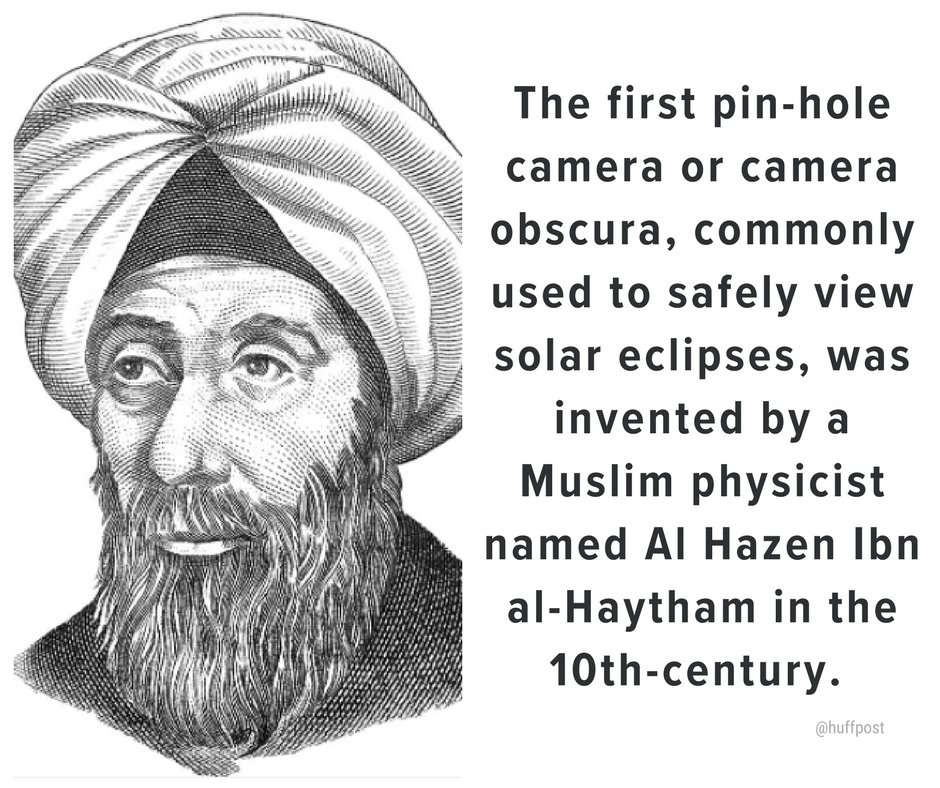
What better way to celebrate the eclipse than to learn more about our star?

Here's an amazing depiction of the sun's magnetic field...
A drawing of the sun's magnetic fields laid over a NASA image of the sun


https://www.nasa.gov/feature/goddard/2016/picturing-the-sun-s-magnetic-field

When it got dark and the temperature dropped, we learned today to appreciate all that our star gives us each day.

Thank you to NPR and Huffington Post for this information:


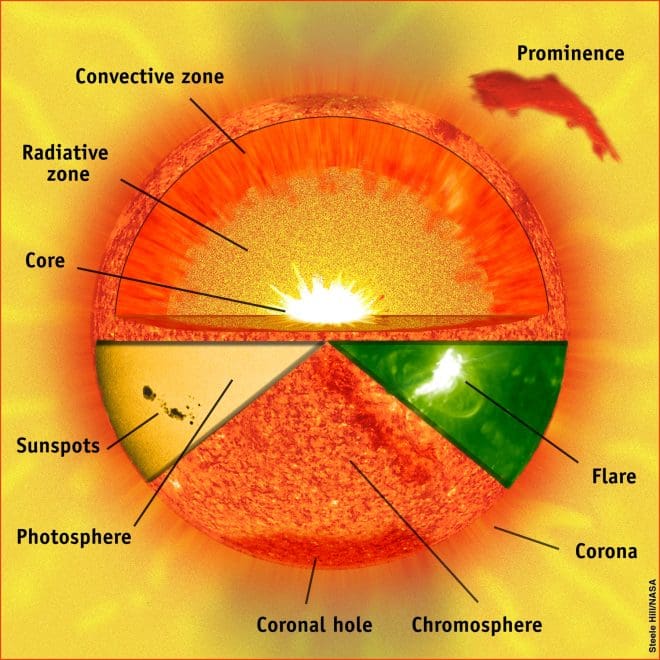
And here's more about the structure of the sun:


from The Sun Today:

http://www.thesuntoday.org/the-sun/solar-structure/

Moon Shadow Is Common

Moon to right above sun at 12 noon, Aug. 21 in Santa Monica (with filter)

Solar eclipses happen about every 18 months, so I couldn't get fired up over this one.

Everybody knows that the moon rotates around Earth.  That means that it passes between Earth and the Sun every month.

Because the moon is so small and 238,900 miles from Earth and doesn't rotate  in the same plane with Earth and Sun, its shadow doesn't always touch Earth, but one out of 18-20 times, the shadow does touch our planet.

Thank you to Sarah Chodosh for explaining this in the journal Popular Science:

http://www.popsci.com/total-eclipses-frequency

Because our planet is so big and much of it is covered by water, any one spot on a continent doesn't move under the moon's shadow that often.

But it's not that big a deal.  

I'm much more interested in the movement of Earth's tectonic plates over millions of years than in the shadow of the moon passing over us today.  


And here's a list of notable eclipses in the 20th Century:

https://en.wikipedia.org/wiki/List_of_solar_eclipses_visible_from_the_United_States

In any case, it's good to look outside the smaller concerns of life on Earth and look instead at movements of the sun, moon, and stars--and the changes in our own planet over millions and billions of years.


Wednesday, August 2, 2017

Crossing Ice Packs on the Trail


I was trying to get to a beautiful high Alpine valley near Sonora Pass on July 14, but I encountered a gully that contained the remnant ice of many snow slides last winter.

I wasn't brave enough to cross it--I hadn't brought hiking poles and didn't have a companion to call for help in case I slid down the snow.  

I hiked up the side of the hill next to it and found a beautiful meadow of tiny Alpine flowers as well as spectacular views--but I didn't go back down to the trail on the other side of the slide. That would have required me to walk back up on the way back.

But today I feel justified in my decision.  The LA Times reports that all high-altitude hikers in California are having a tough time this summer, especially those doing the 3,000-mile Sierra Highline Trail.

http://www.latimes.com/local/lanow/la-me-ln-pacific-crest-trail-dangerous-20170802-story.html

The photo of the hiker with poles inching across the snow tells it all.

See also this report on Mono Lake doing well this year, sent by my friend Diane, who researched and gave me instructions to the hike near Sonora Pass.

http://www.monolake.org/today/2017/07/20/mono-lake-rose-a-record-amount-in-june-2017/

Monday, July 10, 2017

Creatures Great and Small


What an amazing story on NPR today about tortoises in the Galapagos Islands!

http://www.radiolab.org/story/galapagos/

There's beauty in the amazing biodiversity and adaptation of creatures to changes in their environment... from finches to tortoises.

In the show there's also humor and sadness--how a few goats brought by pirates grew into hundreds of thousands that ate the food supply of other animals in the islands.

Much food for thought... hallelujah!

Thank you to Radio Lab for this hour-long show.

Friday, July 7, 2017

Snowmelt & Danger on the Pacific Crest, 2017


Amazing snowpack has created record snow melt and flooding in the Sierra Nevada...  I took this photo on July 8, 2017, with these trees at about 10,000 ft. still surrounded by snow.  The scene is about two miles from the Pacific Crest Trail.

For more photos, see:

http://www.latimes.com/local/california/la-me-flooding-sierra-nevada-20170714-htmlstory.html


People hiking the Pacific Crest Trail were endangered by higher-than-normal streams to cross.  Two drowned, one slipped to his death on ice, and one probably died from heat or dehydration.

https://www.pcta.org/2017/sadness-deaths-pacific-crest-trail-50680/


Saturday, April 22, 2017

Earth Day: Hallelujah!

Right to left: Lizard Head, Gladstone Peak (slightly in foreground), Sheep Mountain (very small) to far left,
all taken from Wilson Peak (foreground) - from the internet, unknown photographer about July 1, near Telluride CO

Earth Day dawns with exquisite beauty, a crescent moon rising close to Venus an hour before the Sun, our life-giving star.